Five months of heavy AI use changed my patience
Late nights, five to seven chats at once, less patience with interruptions. What heavy AI use did to me, and the quiet hours and AI-free Sunday I started.

I've been using AI heavily for about five months. What changed wasn't just how fast the work gets done. It was me. I became less patient, and I didn't notice until it showed.
The three hardest months
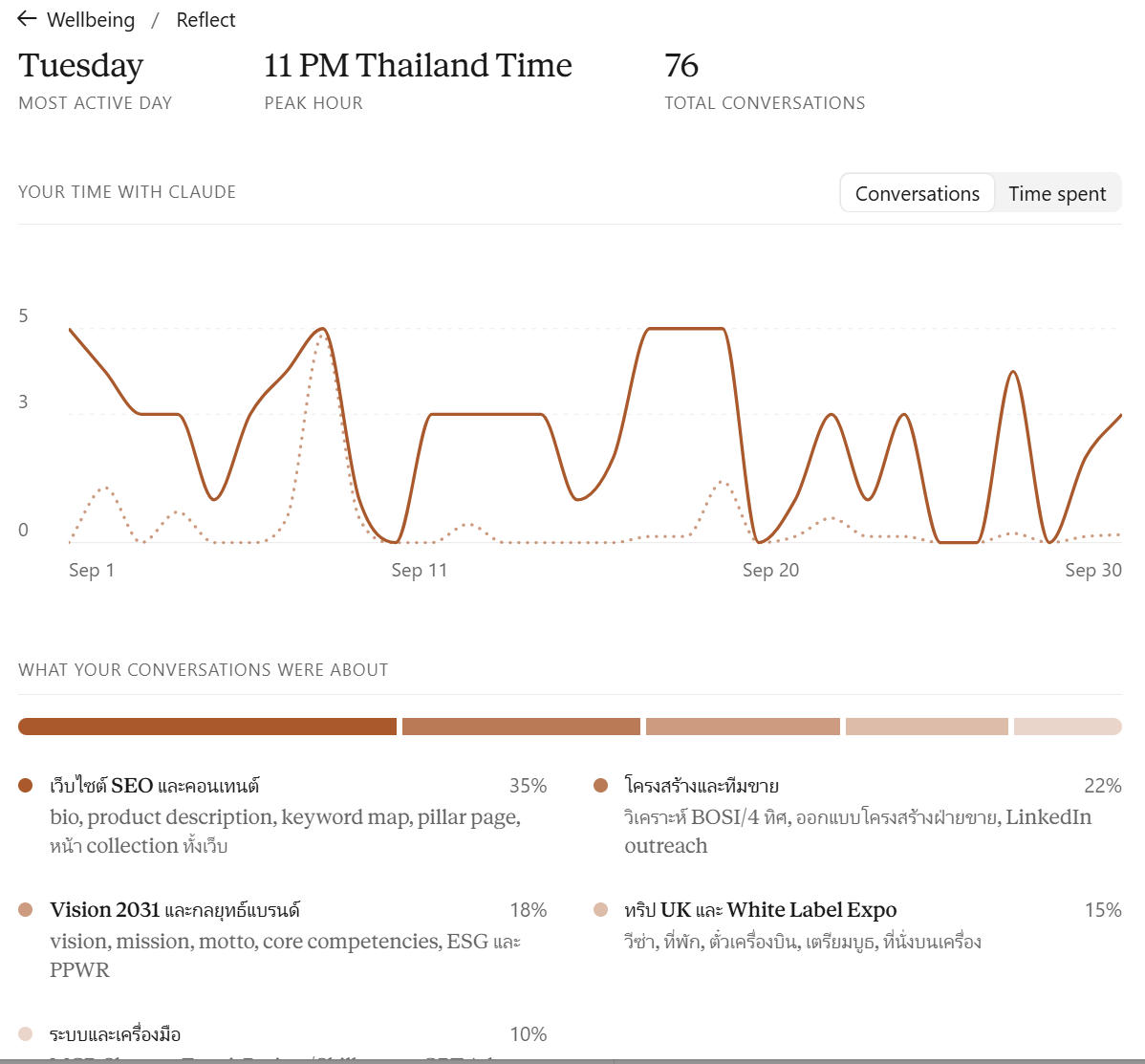
The last three months were the most intense. We've been rebuilding our company's systems from the ground up, and I used Claude for almost everything, both Cowork and Code, from our factory website to our back-office tools.
Honestly, it was fun.
I studied computer science and have been writing code since I was 15, so I have a rough sense of how these models work. Every answer pulled me one level deeper, and every deeper answer made me want to ask one more question. Some nights I looked up and it was 4 or 5 a.m. Some nights it was morning.
A habit I didn't mean to build
Staying up late wasn't the worst part. A small habit was.
I'd send a prompt, the AI would still be working, and I'd get bored waiting. So I'd open a new chat and ask something else. Go back to the first one: still running. Open a third. Some days I had five to seven chats going at once.
As a teenager I was proud of how much I could multitask. In my twenties I learned it wasn't the strength I thought it was, and it took me a long time to unlearn it.
It came right back.
What I noticed in myself
- Meditation stopped working. My mind kept saying “go fix that part” until I got up mid-session to type one more prompt on my phone.
- My phone was back in my hand. People who know me know I don't take calls or answer messages on weekends. I'd kept that phone detox for years. It quietly disappeared.
- I got irritable. A teammate walking over with a normal question felt like an interruption.
Short sleep affects your mood. Constant multitasking affects your mood. Put them together and I was back to being someone who snaps easily.
Meditation at least helped me notice it, and when I noticed, I tried to calm myself down. But there were moments I didn't handle well, and I didn't like that version of myself, because I've worked hard to be better than that.
It wasn't just me
My business partner uses AI just as heavily, to build our factory's back-office system. When we talked about it, the same pattern showed up: less patience, harder to wait, more irritated by interruptions than before.
AI makes the work faster. That speed can quietly eat into your patience.
What I started doing
Two weeks ago I found two settings in Claude that help:
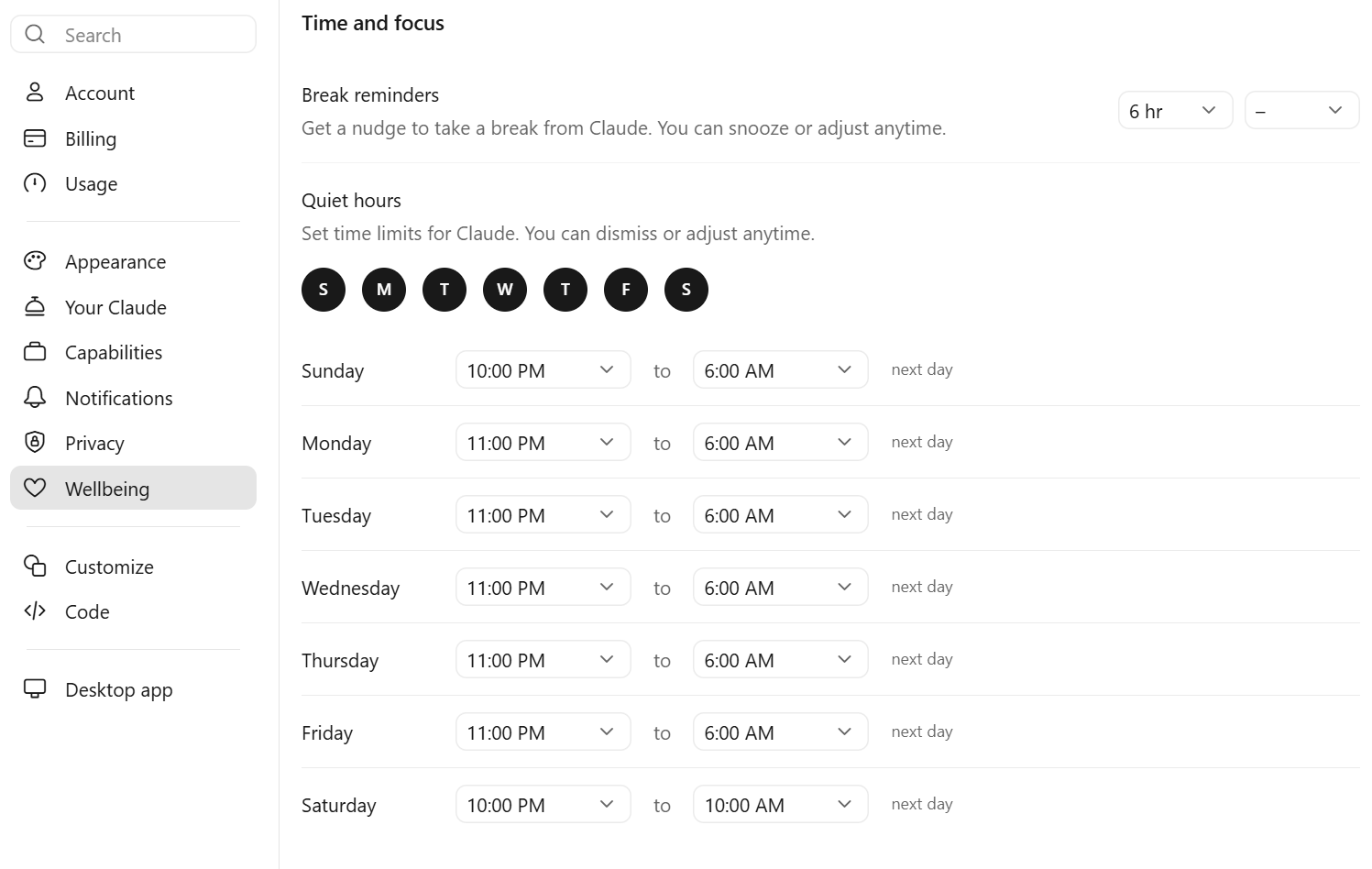
- Break reminder. After about six hours of continuous use, it tells you to take a break.
- Quiet hours. You set times when you can't use it. Mine: from 11 p.m. on weeknights, and from 10 p.m. Saturday until 10 a.m.
And I'm making Sunday an AI-free day. Automations keep running. I don't need to sit and watch them.
It's not 100% yet. But I've gone from going to bed at 4 a.m. to around midnight or 1 a.m. The next goal is to stop when the reminder tells me to.
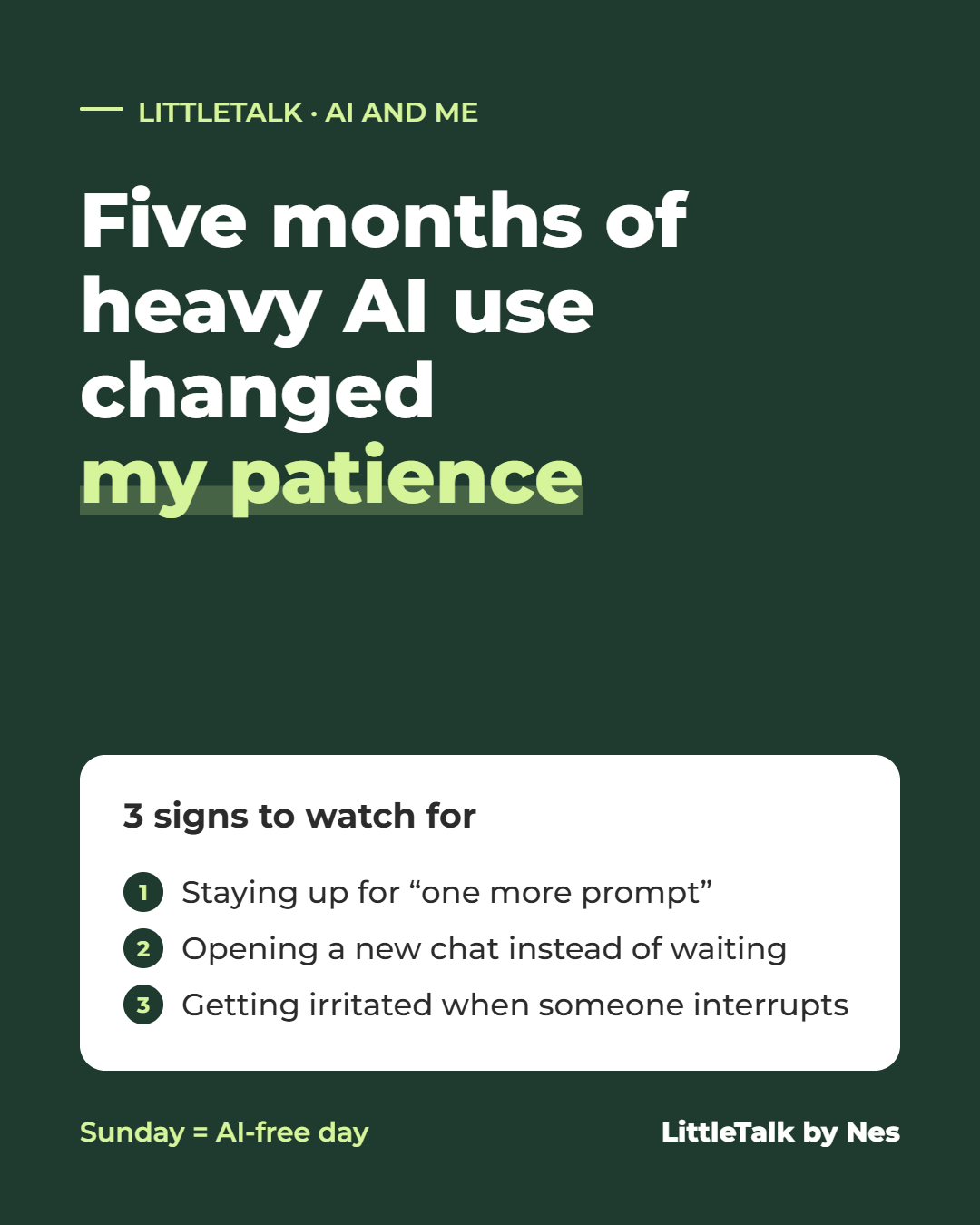
If you use AI heavily, watch for three signs
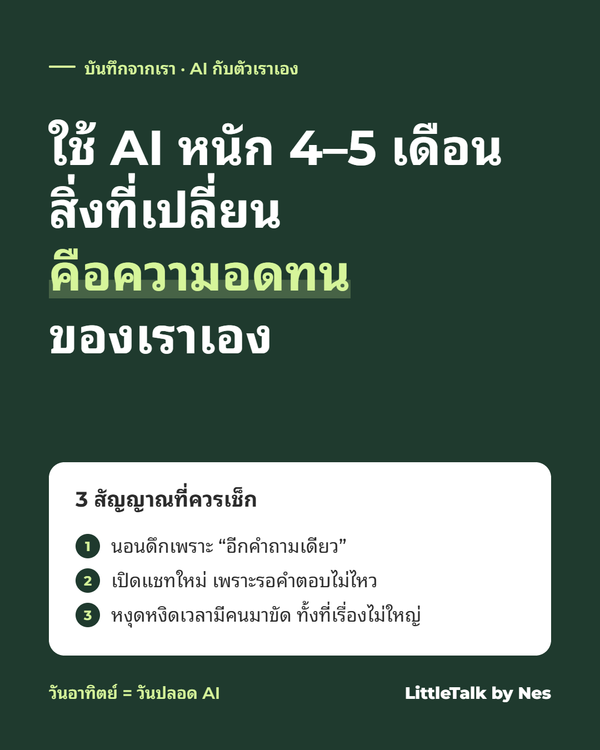
- Staying up for “one more prompt”
- Opening a new chat instead of waiting for the last one
- Getting irritated when someone interrupts you, even over something small
If any of these sound familiar, try setting hours when you don't use AI at all. An in-app setting works. So does an alarm. Give your brain real time to stop waiting for an answer.
AI helps our team move faster and more accurately. It does not replace them, and it shouldn't replace our rest either.
Has anyone else noticed this in themselves?
อ่านภาษาไทย: ใช้ AI หนักมา 5 เดือน สิ่งที่เปลี่ยนไปคือความอดทนของเราเอง